Entry · Ref FDXJWJ6Y
How to Safely Remove Palm Trees in Your Coastal Garden
- Posted
- 2026-10-24
- Last amended
- 2026-10-24
- Account
- @rafaelebzz198
Palm trees suit the Illawarra lifestyle. Cabbage tree palms, Canary Island date palms, Alexandra palms, Queen palms and Bangalow palms are common in Wollongong gardens, from Thirroul to Shellharbour. But palms don't last forever, and removing one is quite different from removing a eucalypt or a camphor laurel. This guide covers how to approach palm removal safely, what the rules are in the Wollongong area, and when it makes sense to call a qualified arborist.
Why Palm Removal Is Different
Palms are monocots, not true trees. They have no branches, no growth rings and no woody trunk in the conventional sense. Instead, the trunk is a bundle of fibrous strands, and the weight is concentrated at the crown. This affects how a palm behaves when it is cut and how it needs to be handled.
- Top-heavy structure: A mature palm can have a heavy crown of fronds and, in some species, large clusters of fruit or seed. Sections can drop suddenly when cut.
- Dense, wet trunk material: Palm trunks hold a lot of moisture, so a short section can weigh far more than you would expect.
- Unpredictable fibre: The fibrous trunk can bind chainsaw chains and cause kickback if the cut is not planned properly.
- Sharp hazards: Canary Island date palms have long, needle-like spines at the base of their fronds that can cause deep puncture wounds.
- Shallow, fibrous roots: Palms have a mass of fine roots rather than a taproot. This makes the stump easier to deal with in some ways, but the root ball can still be large and heavy.
Check the Rules Before You Cut
Before removing any palm in Wollongong, check whether approval is needed. Wollongong City Council regulates tree removal under its development control plan and tree management provisions, and requirements can vary depending on the species, size, location and zoning of your property.
Common Things to Check
- Species and size: Some palms are classed as exempt or invasive, while others may be protected based on height, trunk diameter or heritage significance.
- Heritage and conservation areas: Properties with heritage listings or in conservation zones may need approval even for common garden species.
- Environmentally sensitive land: Coastal properties near the escarpment, dunes, creeks or lagoons can have extra restrictions.
- Proximity to infrastructure: Palms close to powerlines, sewer mains or neighbouring properties can trigger additional requirements.
- Strata or community title: Unit blocks and managed estates usually require body corporate consent.
Rules are updated from time to time, so confirm the current requirements directly with Wollongong City Council or a qualified arborist before starting. Removing a regulated tree without approval can result in significant penalties.
Coastal Conditions That Affect Palm Removal
Gardens near the Illawarra coast have particular challenges that influence how and when a palm should be removed.
Wind and Salt Exposure
Onshore winds and salt spray can weaken palms over time, particularly if they are stressed by drought or poor soil. Strong southerly changes and east coast lows can make a leaning or declining palm a real hazard. Avoid removal work on windy days, since gusts can shift a crown or loose frond unexpectedly.
Sandy and Shallow Soils
Sandy coastal soils may offer less anchorage than heavier clay, so a palm that appears stable can be more prone to toppling than expected. Check for soil heaving at the base, exposed roots or a noticeable lean.
Tight Access and Sloping Blocks
Many Wollongong properties sit on steep or narrow blocks, especially in suburbs along the escarpment. Limited access can make it hard to bring in machinery or drop sections safely, and it often means palms must be taken down in small, controlled pieces.
Signs a Palm Needs Removal
Not every unhealthy palm has to come out, but some warning signs point to a real safety risk.
- A trunk that is soft, hollow or oozing
- Fungal growth at the base, such as conks or brackets
- A sudden or increasing lean
- Crown collapse, where the central spear leaf pulls out easily or the new growth has died
- Widespread browning of fronds that does not respond to treatment
- Palms growing too close to the house, pool, fences or drains
- Fronds or fruit repeatedly dropping onto paths, driveways or neighbouring land
Pests and diseases can also affect palms in New South Wales. If you notice unusual symptoms, an arborist can help determine whether the palm can be treated or whether removal is the safer option.
Can You Remove a Palm Yourself?
Small palms, usually under two or three metres with a manageable trunk, can sometimes be removed by a capable homeowner. Larger palms are a different matter. The combination of height, weight and unpredictable fibre makes them dangerous, and working at height with a chainsaw is one of the leading causes of serious garden injuries in Australia.
Basic Safety Gear
If you are tackling a small palm, wear:
- Safety glasses or a face shield
- Heavy-duty gloves and long sleeves
- Sturdy, closed-toe boots
- A hard hat
- Hearing protection if using power tools
- Chainsaw-rated trousers if a chainsaw is involved
Why Professional Removal Is Often the Better Choice
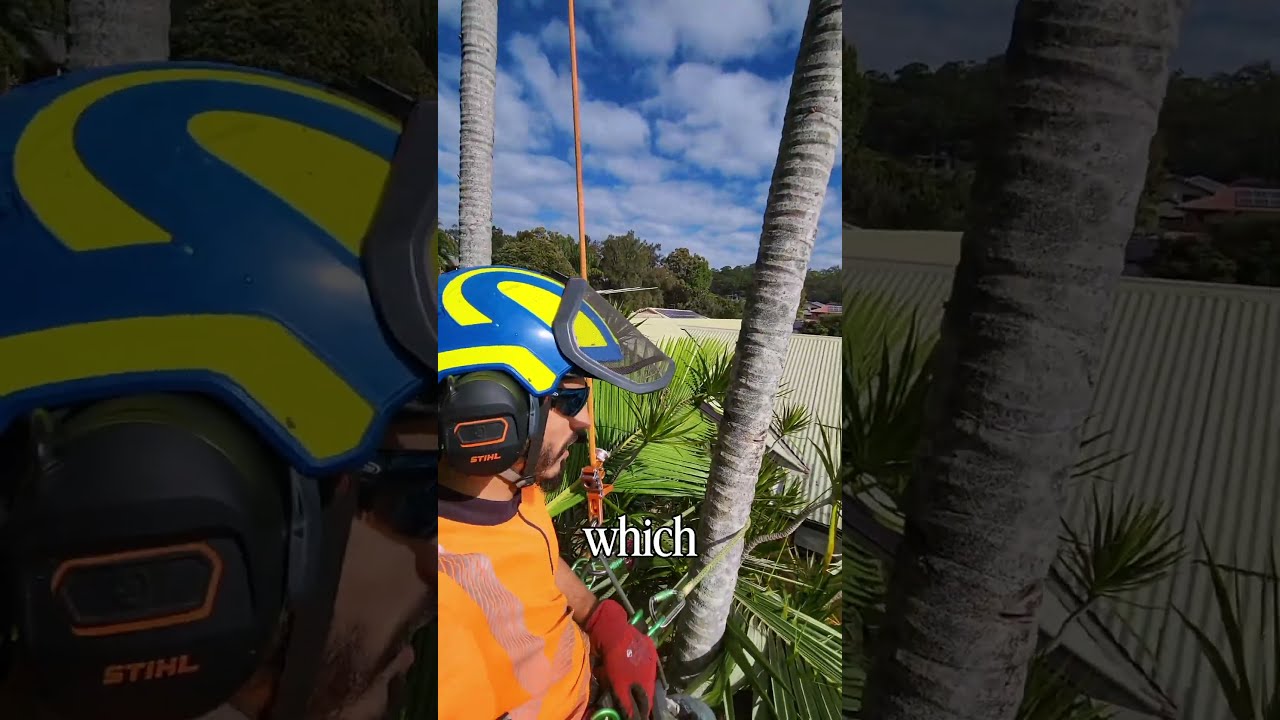
Tall palms near houses, fences, powerlines or pools almost always call for a professional. Qualified arborists have the training, rigging equipment and insurance to dismantle a palm safely, and they can use cranes, elevated work platforms or climbing techniques where appropriate. If something goes wrong during a DIY job, you may not be covered by your home insurance.
How Palm Removal Is Typically Done
The method depends on the species, height, location and access. A professional job generally follows these stages.
- Site assessment: The arborist checks the palm's condition, nearby structures, powerlines, access routes and any council requirements.
- Setting up an exclusion zone: The work area is cordoned off to keep people, pets and vehicles clear.
- Frond and crown removal: Fronds, fruit stalks and the crown are removed first, often lowered on ropes to avoid dropping debris.
- Trunk sectioning: The trunk is cut into manageable lengths, starting from the top and working down. In open spaces, a palm may sometimes be felled in one piece, but this is rarely suitable in suburban gardens.
- Stump treatment: The stump can be ground out, removed with an excavator or left to decay, depending on what you plan to do with the space.
- Clean-up and disposal: Green waste and trunk material are removed from site or processed.
Dealing with the Stump and Roots
Palm stumps do not resprout like many broadleaf trees, since a palm has a single growing point at the crown. Once that is removed, the palm will not regrow. That said, the stump and root mass can still be difficult to remove.
Your Options
- Stump grinding: A grinder reduces the stump to mulch below ground level. This is a popular option because it leaves the area ready for replanting or paving.
- Excavation: A small excavator can lift the root ball out entirely. This is more disruptive but can be useful where the root mass is causing problems.
- Natural decay: Palm stumps can be left to break down over time, although this can take years and may attract termites or fungi.
Because palms have fibrous rather than woody roots, grinding is often quicker than it would be for a hardwood stump. The fibre can still clog equipment, so experienced operators are worthwhile.
Disposing of Palm Waste in Wollongong
Palm material is bulky and heavy, and it does not break down quickly in a compost heap. Your main disposal options include:
- Booking a professional removal service that takes the waste away as part of the job
- Using a local green waste facility, where fees may apply and size limits can be enforced
- Chipping and mulching, although palm fibre can be stringy and is not always ideal as garden mulch
Avoid dumping palm waste in bushland, reserves or along the escarpment. Some palm species, including https://treeremovalwollongong.com.au/about/ Canary Island date palms and Cocos palms, produce seeds that can spread and become weeds, so dispose of fruit and seed heads carefully.
Powerlines and Utilities
If a palm is growing near overhead powerlines, do not attempt removal yourself. In New South Wales, working near live electrical lines requires specially trained and authorised personnel. Contact your electricity network provider or an arborist with the appropriate electrical qualifications. Underground services such as gas, water, sewer and communications cables should also be located before any stump grinding or excavation begins. Dial Before You Dig is a free service that helps you identify underground assets.
Replanting After Palm Removal
Once the palm is gone, consider what will suit the space. Coastal gardens in the Illawarra do best with species that tolerate salt, wind and sandy or variable soils. Native options such as coastal banksia, tuckeroo, lilly pilly cultivars, coastal rosemary and native grasses can provide shade, structure and habitat. If you want to keep a tropical feel, smaller palm species such as the Bangalow palm or the cabbage tree palm (Livistona australis) can be good choices in suitable locations, provided you allow enough room for mature growth.
Before replanting, check how far the new plant will be from buildings, drains and boundaries when fully grown. Matching the species to the site now helps avoid the same removal job in 15 or 20 years.


Choosing a Tree Removal Service in Wollongong
If you decide to hire a professional, look for a business that can demonstrate the following:
- Current public liability insurance and workers compensation cover
- Qualified arborists, ideally with AQF Level 3 or higher in arboriculture
- Experience with palm species and coastal conditions
- A written quote that clearly lists what is included, such as stump grinding and waste removal
- Willingness to help with council approvals if required
Getting two or three quotes is a good way to compare approaches and pricing. Be cautious of anyone who pressures you to decide on the spot or offers a price that seems unusually low, since cutting corners on safety or insurance can leave you exposed.
Final Thoughts
Removing a palm from your coastal garden involves more than cutting it down. Understanding the structure of palms, checking the local rules, planning for coastal conditions and deciding how to handle the stump and waste all contribute to a safe and tidy result. For small palms, a careful DIY approach may be possible. For anything tall, close to structures or near powerlines, a qualified Wollongong arborist is the safest choice. Taking the time to plan properly in 2026 will protect your property, your neighbours and yourself, and set up your garden for 2027 and beyond.
Wollongong Tree Removal Pros
106 Gipps St, Wollongong NSW 2500
(02) 4210 5945